Mat Pilates Exercises A Comprehensive Guide
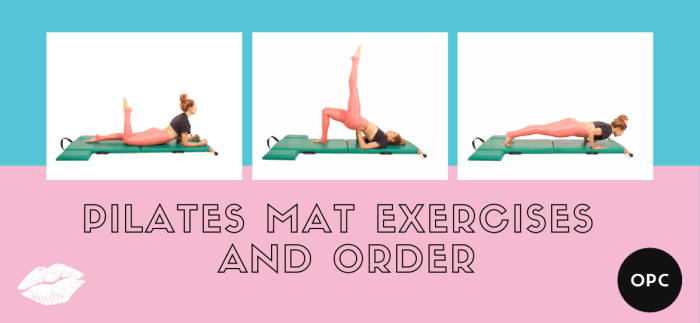
Mat Pilates Exercises offer a dynamic and effective approach to fitness, emphasizing core strength, flexibility, and body awareness. This guide delves into the fundamentals of Mat Pilates, providing a structured progression from beginner to advanced exercises, catering to diverse fitness levels and goals. We’ll explore proper form, modifications for various needs, and the integration of Mat Pilates into a holistic wellness plan.
From understanding the basic principles and required equipment to mastering intermediate and advanced techniques, this resource aims to empower you with the knowledge and tools to embark on your Mat Pilates journey. We will also examine how Mat Pilates complements other fitness disciplines and how to safely and effectively incorporate it into your routine.
Introduction to Mat Pilates Exercises
Mat Pilates is a low-impact form of exercise that focuses on strengthening the core muscles, improving flexibility, and increasing body awareness. It emphasizes controlled movements, precise execution, and mindful breathing, leading to a balanced and strengthened physique. Unlike high-impact exercises, Mat Pilates minimizes stress on joints, making it suitable for individuals of various fitness levels and ages.Mat Pilates differs from other forms of exercise in its emphasis on core strength and precise movements.
While cardio workouts focus on cardiovascular health and weight training targets muscle hypertrophy, Mat Pilates integrates both aspects while prioritizing core engagement and controlled movements for improved posture, balance, and overall body control. The mindful approach also fosters a deeper connection between mind and body, promoting relaxation and stress reduction.
Fundamental Principles of Mat Pilates
The fundamental principles of Mat Pilates are crucial for maximizing its benefits and minimizing the risk of injury. These principles include proper breathing techniques (diaphragmatic breathing), concentration to maintain focus and precision during each exercise, centering to engage the core muscles, control to execute movements smoothly and deliberately, and precision to perform exercises correctly and efficiently. Adherence to these principles ensures effective engagement of target muscles and prevents strain.
Benefits of Mat Pilates
Mat Pilates offers a wide range of benefits, extending beyond simple physical fitness. It improves core strength, crucial for stability and injury prevention in everyday activities. Increased flexibility and improved posture are also significant benefits, contributing to better body alignment and reducing back pain. Furthermore, Mat Pilates enhances body awareness, leading to improved coordination and balance. The mental benefits include stress reduction and improved focus due to the mindful nature of the practice.
Necessary Equipment for Mat Pilates
Minimal equipment is required for Mat Pilates, making it accessible to many. A mat provides cushioning and support during exercises. While optional, a small towel can be useful for added grip or to wipe sweat. Some individuals may choose to use resistance bands or a Pilates ring for added challenge and muscle engagement, but these are not essential for beginners.
Comparison of Mat Pilates Exercises
The following table compares different Mat Pilates exercises based on their difficulty level and the muscle groups they primarily target. Difficulty is rated on a scale of 1 to 3 (1 being easiest, 3 being most difficult), acknowledging that individual experience and strength levels will influence perceived difficulty.
| Exercise | Difficulty | Primary Muscle Groups Targeted | Additional Notes |
|---|---|---|---|
| Hundred | 1 | Abdominals, deep core | Focuses on breath control and core stabilization |
| Roll Up | 2 | Abdominals, hip flexors, back extensors | Requires controlled spinal flexion and extension |
| Roll Over | 3 | Abdominals, hamstrings, back extensors | Requires significant core strength and flexibility |
| Single Leg Circles | 2 | Hip flexors, abductors, adductors | Improves hip mobility and stability |
| Swimming | 2 | Abdominals, back extensors, shoulders | Works on core strength and upper body endurance |
| Bridge | 1 | Glutes, hamstrings, lower back | Focuses on glute activation and hip extension |
Basic Mat Pilates Exercises
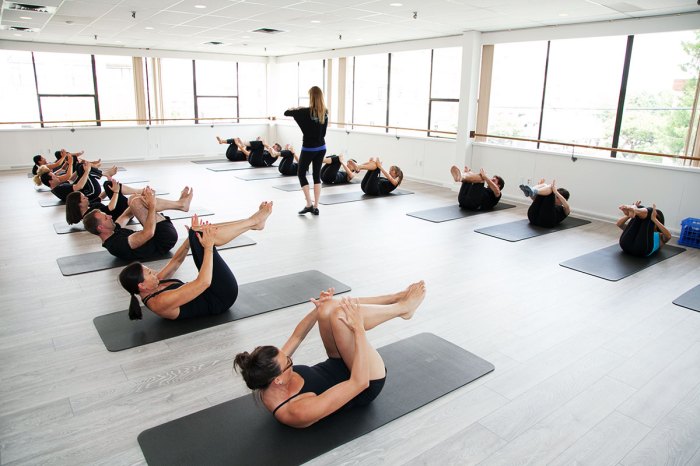
Pilates, when performed correctly, is a fantastic way to build core strength, improve posture, and increase flexibility. These basic exercises are ideal for beginners and provide a solid foundation for more advanced movements. Remember to focus on proper form over speed; quality over quantity is key in Pilates.
The Hundred
This exercise emphasizes breath control and abdominal engagement. Lie on your back with knees bent and feet flat on the floor. Curl your head and shoulders off the mat, engaging your abdominal muscles. Extend your arms alongside your body, palms facing down. Inhale deeply, then exhale while pumping your arms up and down, performing small, controlled movements.
Continue for 100 counts, maintaining a steady breath and abdominal engagement.Common Mistakes: Arching the back, holding your breath, and letting your shoulders hunch towards your ears. Modifications: Beginners can reduce the number of pumps or perform the exercise with arms by their sides. Individuals with neck pain may prefer to keep their head on the mat.
Roll Up
This exercise strengthens the spine and abdominal muscles. Lie on your back with arms extended overhead. Inhale and curl your spine off the mat, vertebra by vertebra, reaching towards your toes. Exhale as you slowly roll back down to the starting position, again vertebra by vertebra, controlling the movement.Common Mistakes: Jerking the movement, using momentum instead of controlled abdominal engagement, and arching the back.
Modifications: Beginners can bend their knees to reduce the range of motion. Those with limited back flexibility can modify the roll-up by only curling halfway.
Single Leg Circle
This exercise improves hip mobility and strengthens the core. Lie on your back with one leg extended towards the ceiling and the other leg bent at the knee with the foot flat on the floor. Inhale and draw a large circle with your extended leg, keeping your leg straight and your core engaged. Exhale as you complete the circle.
Repeat several times, then switch legs.Common Mistakes: Allowing the lower back to arch, using momentum, and not fully engaging the core. Modifications: Beginners can perform smaller circles. Individuals with hip or knee issues may want to reduce the range of motion or perform the exercise with the leg slightly bent.
Single Leg Stretch
This exercise targets the abdominal muscles and improves core stability. Lie on your back with knees bent and feet flat on the floor. Curl your head and shoulders off the mat. Extend one leg towards the ceiling while simultaneously bringing the opposite knee towards your chest. Switch legs in a controlled manner, maintaining the abdominal engagement.Common Mistakes: Pulling on the neck, not engaging the core, and using momentum instead of controlled movement.
Modifications: Beginners can start with smaller movements and gradually increase the range of motion. Those with lower back pain may want to keep their feet flat on the floor.
Criss-Cross
This exercise strengthens the obliques and improves spinal rotation. Lie on your back with hands behind your head, elbows wide. Curl your head and shoulders off the mat, engaging your abdominal muscles. Bring one elbow towards the opposite knee while extending the other leg. Switch sides in a controlled manner, maintaining abdominal engagement and avoiding pulling on the neck.Common Mistakes: Pulling on the neck, arching the back, and using momentum instead of controlled movement.
Modifications: Beginners can perform the exercise with their hands on their thighs instead of behind their heads. Individuals with neck pain may want to keep their head on the mat.
Sample Beginner Mat Pilates Workout Routine (15-20 minutes)
This routine focuses on proper form and gradual progression. Remember to listen to your body and rest when needed.
- The Hundred (5 repetitions)
- Roll Up (5 repetitions)
- Single Leg Circle (10 repetitions per leg)
- Single Leg Stretch (10 repetitions per leg)
- Criss-Cross (10 repetitions per side)
Repeat the entire routine 2-3 times, allowing for rest between sets. Focus on maintaining proper form and breathing throughout each exercise. Gradually increase the repetitions and sets as you gain strength and endurance.
Advanced Mat Pilates Exercises
This section delves into three advanced Mat Pilates exercises, requiring a higher level of core strength, stability, and flexibility than beginner or intermediate exercises. These exercises build upon foundational Pilates principles and challenge the body in new ways, promoting further strength gains and improved body awareness. Remember to always listen to your body and stop if you feel pain.
The Corkscrew
The Corkscrew is a dynamic spinal articulation exercise that enhances spinal mobility, strengthens the obliques, and improves core stability. It requires significant control and coordination.The primary muscle groups engaged include the deep abdominal muscles (transversus abdominis), obliques (internal and external), and the spinal erectors. Secondary muscle groups involved are the hip flexors and glutes, which assist in the controlled movement of the legs.Potential risks include lower back strain if the movement is performed too forcefully or without proper control.
Precautions include maintaining a neutral spine throughout the exercise and avoiding jerky movements. Beginners should practice the preparatory movements before attempting the full exercise.Body Alignment: The exercise begins in a supine position with legs extended towards the ceiling. The spine remains in neutral alignment against the mat throughout. As the legs lower to one side, the opposite shoulder blade lifts slightly off the mat to initiate the twist, maintaining engagement of the core.
The movement continues in a controlled, spiraling motion as the legs lower to the other side. The head and neck remain relaxed, and the movement originates from the core, not the legs.
The Teaser
The Teaser is a challenging exercise that strengthens the entire core, including the rectus abdominis, obliques, and transverse abdominis. It also improves hip flexor flexibility and balance.The primary muscle groups engaged are the rectus abdominis (responsible for the sit-up component), the obliques (for stabilization during the twist), and the hip flexors (to bring the legs towards the chest). The back extensors are also involved in maintaining spinal stability.Potential risks include lower back strain if the movement is rushed or if the core isn’t sufficiently engaged.
Neck strain can also occur if the head is not aligned with the spine. Precautions include performing the exercise slowly and deliberately, maintaining a neutral spine, and avoiding rounding of the back. Modified versions, such as a half-teaser, can be performed to gradually build strength and control.Body Alignment: The exercise begins in a supine position with arms extended overhead.
The spine remains flat against the mat. The movement involves simultaneously curling the torso upwards while extending the legs towards the ceiling. The arms remain extended, and the movement is controlled and balanced. The eyes look forward, maintaining a neutral neck position. The entire movement is a smooth, controlled transition from supine to a balanced, seated position with extended legs, then back to the starting position.
Side Kick Series
The Side Kick Series strengthens the hip abductors, improves stability, and enhances core strength. This exercise requires significant balance and control.The primary muscle groups engaged are the gluteus medius and minimus (hip abductors), the transverse abdominis (deep core stabilizer), and the obliques (for lateral stability).Potential risks include strain on the hip flexors or groin if the kicks are too forceful or uncontrolled.
Imbalances in the hip abductors can also exacerbate existing lower back pain. Precautions include maintaining a stable core, avoiding hyperextension of the hip, and keeping the leg movements controlled and precise. Beginners can modify the exercise by reducing the height of the leg lifts.Body Alignment: The exercise begins in a side-lying position with the body supported by the forearm.
The legs are extended and stacked on top of each other. The pelvis is aligned and the spine is straight. The top leg is lifted and lowered with control, maintaining the alignment of the pelvis. The core remains engaged throughout, preventing the hips from dropping or swaying. The head is supported by the extended arm, maintaining a neutral neck.
Mat Pilates for Specific Goals
Mat Pilates, with its focus on controlled movements and core engagement, offers a versatile approach to fitness, allowing customization for various goals. By strategically selecting exercises and modifying intensity, practitioners can target specific areas for improvement, enhancing strength, flexibility, and posture. This section details tailored routines for achieving these common fitness objectives.
Core Strength Improvement Routine
This routine emphasizes exercises that directly engage the deep abdominal muscles, obliques, and lower back, crucial for a strong and stable core. Consistent practice will build strength and improve stability, benefiting daily activities and athletic performance.
The following exercises should be performed for 10-12 repetitions each, with 2-3 sets. Remember to maintain proper form and focus on controlled movements rather than speed.
- Hundred: This foundational exercise engages the entire core while improving breath control.
- Roll-up: Works the entire abdominal chain, improving spinal articulation and control.
- Criss-Cross: Targets the obliques, enhancing rotational strength and stability.
- Double Leg Stretch: A dynamic exercise that challenges the core’s ability to stabilize during movement.
- Single Leg Circle: Improves hip mobility and core stability through controlled leg circles.
- Plank: A static hold that strengthens the entire core, emphasizing stability and endurance.
Flexibility Enhancement Routine
This routine focuses on exercises that increase range of motion in major muscle groups, improving flexibility and reducing the risk of injury. Gentle stretching and controlled movements are key to safely increasing flexibility.
Hold each stretch for 30 seconds, repeating 2-3 times per side. Focus on deep breathing and controlled movements to avoid overstretching.
- Spine Stretch Forward: Lengthens the spine and hamstrings.
- Side Bend: Stretches the obliques and lateral spinal muscles.
- Mermaid: Stretches the spine and hips, improving lateral flexibility.
- Rolling Like a Ball: Increases spinal mobility and flexibility.
- Shoulder Bridge: Opens the hips and chest, improving posture and flexibility.
- Neck Pull: Gently stretches the neck muscles, relieving tension.
Posture Improvement Routine, Mat Pilates Exercises
This routine targets muscles that support proper posture, strengthening the back and core while lengthening the chest and shoulders. Consistent practice can help alleviate back pain and improve overall posture.
Perform each exercise for 10-12 repetitions, with 2-3 sets. Focus on maintaining proper alignment throughout each movement.
- Swimming: Strengthens the back and abdominal muscles, improving spinal stability.
- Saw: Stretches the spine and improves lateral flexibility, promoting spinal alignment.
- Spine Twist: Improves spinal rotation and flexibility, relieving tension in the back.
- Chest Expansion: Strengthens the chest muscles, counteracting rounded shoulders.
- Shoulder Bridge: Strengthens the glutes and hamstrings, improving pelvic alignment.
- Neck Pull: Gently stretches the neck muscles, relieving tension and improving head posture.
Mat Pilates Integration into a Broader Fitness Plan
Mat Pilates can be seamlessly integrated into various fitness plans. It complements cardiovascular exercises by improving core strength and stability, enhancing performance and reducing injury risk. For example, incorporating a Mat Pilates session twice a week can strengthen the core muscles crucial for running or cycling, improving efficiency and endurance. Similarly, it can enhance flexibility and range of motion, supporting other activities like yoga or weight training.
The low-impact nature of Mat Pilates makes it suitable for individuals of all fitness levels and can serve as an active recovery method after high-intensity workouts. It’s a valuable tool for improving overall fitness and well-being, regardless of the primary fitness focus.
Mat Pilates and Other Fitness Disciplines
Mat Pilates, while a distinct discipline, synergistically complements other fitness approaches, enhancing overall well-being and achieving diverse fitness goals. Understanding its interplay with other practices allows for a more holistic and effective fitness regimen.Mat Pilates shares some common ground with yoga and meditation, but also possesses unique characteristics. The integration of Mat Pilates with strength training, cardio, and other activities amplifies its benefits, leading to more comprehensive physical and mental improvements.
Mat Pilates, Yoga, and Meditation: A Comparative Analysis
Mat Pilates, Yoga, and Meditation all contribute to improved physical and mental health, but they achieve this through different techniques. Mat Pilates emphasizes core strength and body control through precise movements, often involving repetitions. Yoga incorporates postures, breathing techniques, and mindfulness, focusing on flexibility, balance, and stress reduction. Meditation, primarily a mental practice, aims to cultivate inner peace and awareness through focused attention.
While all three can improve flexibility and reduce stress, Mat Pilates’ focus on controlled movements builds muscular strength and endurance more directly than Yoga or Meditation. Yoga’s emphasis on flexibility and breathwork is less pronounced in Mat Pilates, and meditation’s mental focus is not the primary goal of Mat Pilates.
Integrating Mat Pilates with Strength Training
Combining Mat Pilates with strength training offers significant advantages. Mat Pilates builds a strong foundation of core stability and body awareness, which is crucial for proper form and injury prevention during strength training exercises. This synergy improves overall strength, power, and balance. For example, a strong core developed through Pilates enhances performance in squats and deadlifts, while improved body awareness reduces the risk of strain during weightlifting.
The improved postural control gained from Mat Pilates can directly translate into better performance and reduced risk of injury in other strength training activities.
Mat Pilates and Cardio Workouts for Weight Loss
Mat Pilates, while not a high-intensity cardio workout, complements cardio effectively in weight loss programs. The increased core strength and muscle tone developed through Mat Pilates boost metabolism, leading to increased calorie burn even at rest. Moreover, improved posture and body awareness, which Mat Pilates cultivates, can improve the efficiency of cardio exercises, resulting in better performance and greater calorie expenditure.
For instance, someone who incorporates Mat Pilates into their running routine may experience improved running form and endurance, leading to a more effective and sustainable weight loss program.
Synergistic Effects of Combining Mat Pilates with Other Fitness Practices
Combining Mat Pilates with other fitness activities creates a powerful synergy, enhancing the benefits of each.
- Pilates and Stretching: Mat Pilates enhances flexibility and range of motion, which is further improved through dedicated stretching routines. This combination leads to greater body awareness, improved posture, and injury prevention.
- General Fitness Guides: Mat Pilates provides a structured approach to fitness that complements general fitness guidelines, ensuring a balanced and well-rounded workout program.
- Home Workouts: Mat Pilates is easily adaptable to home workouts, making it a convenient and accessible part of a home fitness routine.
- Outdoor Fitness Adventures: Improved core strength and stability from Mat Pilates enhance performance and reduce injury risk in outdoor activities such as hiking and trail running.
- Fitness Gadgets and Gear: Using fitness gadgets like resistance bands or stability balls alongside Mat Pilates exercises adds variety and intensifies the workout.
- Fitness Challenges and Plans: Incorporating Mat Pilates into fitness challenges and plans provides a solid foundation for strength, stability, and injury prevention, maximizing the effectiveness of the overall program.
Safety and Considerations in Mat Pilates: Mat Pilates Exercises
Mat Pilates, while a gentle exercise form, requires careful attention to proper technique to maximize benefits and minimize risk of injury. Understanding potential hazards and employing preventative measures is crucial for a safe and effective practice. This section details important safety considerations for all participants, regardless of experience level.
Potential Injuries Associated with Improper Mat Pilates Form
Improper form during Mat Pilates exercises can lead to several injuries. Common issues stem from incorrect spinal alignment, improper muscle engagement, and insufficient stabilization. For example, performing a roll-up without engaging the core properly can strain the lower back, while neglecting proper neck alignment during the hundred can lead to neck pain. Similarly, incorrect execution of the side kick series may overstress the hip flexors or lower back.
Overexertion without adequate warm-up or insufficient rest between exercises can also contribute to muscle strains and tears. Paying close attention to instructor cues and practicing in front of a mirror can significantly reduce the risk of these injuries.
Importance of Proper Breathing Techniques During Exercises
Controlled breathing is integral to Mat Pilates. It facilitates proper muscle engagement, enhances core stability, and aids in relaxation. Exhaling during exertion, such as during a roll-up or a hundred, helps to stabilize the spine and engage the core muscles effectively. Inhaling during less strenuous parts of an exercise helps to maintain oxygen flow and prevent muscle fatigue.
Inconsistent or shallow breathing can lead to decreased efficiency and increased risk of injury. Mastering the coordination of breath and movement is key to reaping the full benefits of Mat Pilates.
Listening to Your Body and Modifying Exercises
Pilates emphasizes mindful movement. It’s crucial to listen to your body and adjust exercises as needed. Pain is a significant warning sign. Never push through sharp or persistent pain. If you experience discomfort, modify the exercise by reducing the range of motion, using props for support (such as a towel or a pillow), or taking breaks.
For example, if you experience back pain during a roll-up, you can modify the exercise by performing it only halfway up. Regularly checking in with your body allows for adjustments that prevent injury and promote a safe practice.
Precautions for Individuals with Specific Medical Conditions
Individuals with specific medical conditions, such as back injuries, osteoporosis, or hypertension, should consult their physician or physical therapist before starting Mat Pilates. They may need to modify certain exercises or avoid them altogether. For example, individuals with osteoporosis might need to avoid exercises that involve excessive spinal flexion or extension. Those with hypertension may need to modify exercises that involve holding their breath.
Working closely with healthcare professionals to create a tailored program ensures a safe and beneficial Pilates practice. Open communication with your instructor about your medical history is also vital.
Mastering Mat Pilates is a journey of self-discovery and physical enhancement. By consistently practicing the exercises Artikeld here, and paying close attention to proper form and body awareness, you can unlock significant improvements in core strength, flexibility, posture, and overall well-being. Remember to listen to your body, modify exercises as needed, and enjoy the process of strengthening and lengthening your muscles while improving your mind-body connection.
FAQ
Is Mat Pilates suitable for beginners?
Absolutely! This guide includes a dedicated section for beginners, outlining modifications and a simple workout routine to ease you into the practice.
How often should I do Mat Pilates?
Ideally, aim for 2-3 sessions per week, allowing for rest days to prevent overtraining and muscle soreness.
Do I need any special equipment for Mat Pilates?
A mat is essential, but you can also benefit from using resistance bands or a small stability ball for added challenge.
What if I have a back injury?
Consult your doctor or physical therapist before starting any new exercise program, especially if you have a pre-existing condition. Modifications are possible, but proper guidance is crucial.


