Dynamic Stretching vs. Static Stretching A Comparison
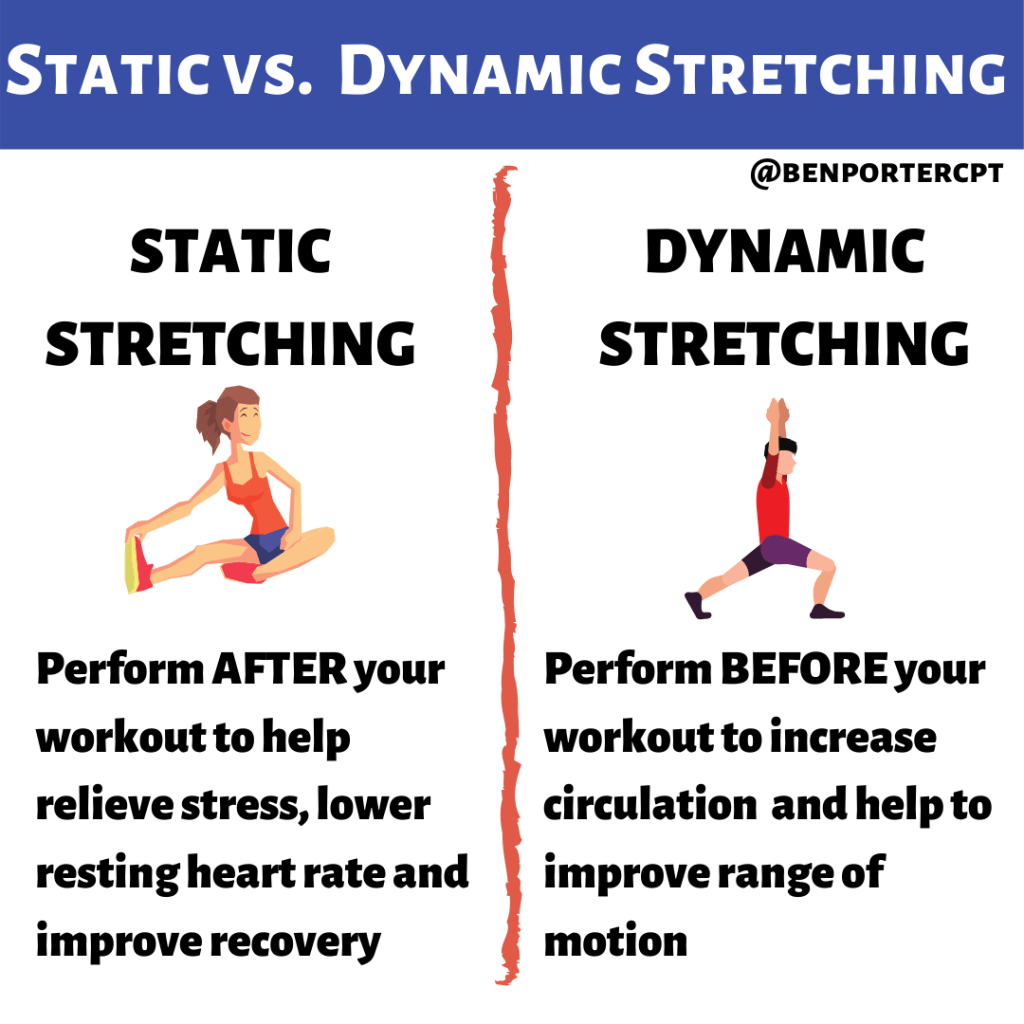
Dynamic Stretching vs. Static Stretching: This exploration delves into the distinct characteristics and benefits of these two crucial stretching methodologies. We’ll examine their physiological impacts, optimal applications before and after workouts, and their roles in injury prevention and overall fitness enhancement. Understanding the nuances of each approach is key to designing a personalized stretching routine that maximizes results and minimizes risk.
The differences between dynamic and static stretching extend beyond simple movement. Dynamic stretches involve controlled, continuous movements, preparing the body for activity by increasing blood flow and muscle temperature. Static stretches, conversely, involve holding a position for a sustained period, improving flexibility and range of motion by lengthening muscles. This comparison will illuminate the ideal scenarios for employing each method, highlighting their unique contributions to athletic performance and overall well-being.
Dynamic Stretching vs. Static Stretching
The choice between dynamic and static stretching hinges largely on the timing relative to your workout. Both play crucial roles in preparing the body for activity and aiding recovery, but their application differs significantly. Understanding these differences is key to optimizing your training and minimizing the risk of injury.
Dynamic Stretching Pre-Workout
Dynamic stretching involves controlled movements that mimic the actions of your workout. This type of stretching increases blood flow to the muscles, raises your body temperature, and improves range of motion in a functional way. It prepares your muscles and joints for the demands of exercise, improving performance and reducing the likelihood of strains or tears. Avoid bouncing movements; instead, focus on smooth, controlled stretches through a full range of motion.
A sample pre-workout dynamic stretching routine (adjust based on your workout):
- Arm Circles: 10 forward, 10 backward. This warms up the shoulder joints and improves mobility for activities involving overhead movements.
- Leg Swings: 10 forward and 10 backward per leg. This loosens up the hip flexors, hamstrings, and quads, crucial for running, jumping, and other lower-body exercises.
- Torso Twists: 10 repetitions in each direction. This improves spinal mobility and prepares the core for exertion.
- High Knees: 20 repetitions. This increases blood flow to the legs and warms up the hip flexors and quads.
- Butt Kicks: 20 repetitions. This warms up the hamstrings and glutes.
- Walking Lunges with a Twist: 10 repetitions per leg. This improves hip mobility and core stability.
Static Stretching Post-Workout
Static stretching involves holding a stretch in a stationary position for a prolonged period (typically 15-30 seconds). This type of stretching is ideal for post-workout recovery because it helps to lengthen muscles that have been shortened and tightened during exercise. It increases blood flow to the muscles, promotes relaxation, and can help to reduce muscle soreness and stiffness. Remember to breathe deeply throughout each stretch and avoid bouncing.
A sample post-workout static stretching routine:
- Hamstring Stretch: Extend one leg straight out in front of you, keeping your back straight. Reach towards your toes, holding the stretch for 30 seconds. Repeat on the other side.
- Quadriceps Stretch: Stand on one leg, grab your foot with your hand, and gently pull your heel towards your buttock. Hold for 30 seconds. Repeat on the other side.
- Calf Stretch: Lean against a wall with one leg straight behind you, heel on the ground. Bend your front knee slightly and hold for 30 seconds. Repeat on the other side.
- Hip Flexor Stretch: Kneel on one knee, keeping the other leg bent at a 90-degree angle in front of you. Gently push your hips forward until you feel a stretch in the front of your hip. Hold for 30 seconds. Repeat on the other side.
- Triceps Stretch: Reach one arm overhead and bend at the elbow, bringing your hand down behind your head. Gently pull your elbow towards your head with your other hand. Hold for 30 seconds. Repeat on the other side.
- Chest Stretch: Clasp your hands behind your back and gently straighten your arms, lifting your chest. Hold for 30 seconds.
- Shoulder Stretch: Reach one arm across your body and hold it at the elbow with your other hand. Gently pull your arm towards your chest. Hold for 30 seconds. Repeat on the other side.
Dynamic and Static Stretching for Specific Activities
Choosing the right type of stretching—dynamic or static—significantly impacts performance and injury prevention in various activities. Understanding the specific needs of different sports and activities allows for the creation of personalized warm-up and cool-down routines. This section will explore the application of dynamic and static stretching for several common activities.
Dynamic and Static Stretching Applications Across Activities
The following table Artikels recommended dynamic and static stretches for specific activities, along with their associated benefits. Remember that individual needs and fitness levels should always guide the selection and intensity of stretches.
| Activity | Recommended Dynamic Stretches | Recommended Static Stretches | Benefits |
|---|---|---|---|
| Running | Leg swings (forward and side-to-side), arm circles, torso twists, high knees, butt kicks | Hamstring stretch, quadriceps stretch, calf stretch, hip flexor stretch, groin stretch | Improved flexibility, increased range of motion, enhanced muscle activation, reduced risk of injury, improved running efficiency. |
| Swimming | Arm circles (forward and backward), shoulder rotations, leg swings (forward and backward), torso twists | Shoulder stretch, triceps stretch, chest stretch, lat stretch, hamstring stretch | Increased range of motion in shoulders and hips, improved flexibility, enhanced muscle activation, improved stroke technique, reduced risk of shoulder impingement. |
| Yoga | Sun salutations (Surya Namaskar), cat-cow pose, gentle twists | Forward fold (Uttanasana), downward-facing dog (Adho Mukha Svanasana), warrior poses (Virabhadrasana I, II, III), triangle pose (Trikonasana) | Improved flexibility, increased range of motion, stress reduction, improved balance and coordination, enhanced body awareness. Note that dynamic stretches are less emphasized in yoga compared to other activities. |
| Weightlifting | Arm circles, shoulder rotations, torso twists, leg swings, dynamic stretches specific to the exercises to be performed (e.g., squats, deadlifts) | Static stretches focusing on major muscle groups used in the workout (e.g., chest, back, shoulders, legs, biceps, triceps), holding each for 20-30 seconds. | Improved flexibility, increased range of motion, enhanced muscle activation, reduced risk of injury, improved performance. |
Modifying Stretching Routines Based on Individual Needs
Individual needs and fitness levels significantly influence the appropriate stretching routine. Beginners should start with shorter durations and lower intensities, gradually increasing both as flexibility improves. Those with pre-existing injuries or conditions should consult a healthcare professional or physical therapist before starting any new stretching program. For example, a person recovering from a hamstring injury might focus on gentle static stretches for the hamstrings, avoiding any dynamic stretches that could aggravate the injury.
Conversely, an elite athlete might incorporate more intense dynamic stretches to improve their power and speed. Careful listening to your body and adjusting the intensity and duration of stretches based on your personal experience is crucial for safety and effectiveness.
Common Mistakes in Stretching
Stretching, while beneficial for flexibility and injury prevention, is often performed incorrectly, negating its positive effects and potentially leading to harm. Understanding common mistakes and implementing corrective techniques is crucial for maximizing the benefits of stretching and minimizing the risks. This section will highlight frequent errors in both dynamic and static stretching, offering solutions to improve your stretching practice.
Improper Form and Technique in Static Stretching
Maintaining proper form during static stretches is paramount to avoid injury. A common mistake is bouncing or jerking during the stretch, which can overstretch muscles and cause tears. Another frequent error involves holding the breath, restricting blood flow and potentially causing dizziness. Furthermore, many individuals stretch too far, exceeding their comfortable range of motion and increasing the risk of strain.
Instead of bouncing, a slow, controlled movement into the stretch should be adopted, holding the position without pain for 15-30 seconds. Deep, controlled breathing throughout the stretch ensures adequate oxygen supply to the muscles. Finally, respecting individual limitations and avoiding pushing beyond a comfortable range of motion is essential.
Ignoring Muscle Imbalances in Static Stretching, Dynamic Stretching vs. Static Stretching
Static stretching often focuses on isolated muscle groups, neglecting the interconnectedness of the body’s musculature. This oversight can exacerbate existing muscle imbalances, leading to further problems. For example, someone with tight hamstrings might neglect to address the hip flexors, which are often tight in conjunction with tight hamstrings. A holistic approach is needed, addressing both tight and weak muscles in a balanced way.
This might involve incorporating exercises that strengthen weaker muscles and stretches that target both the tight and opposing muscle groups to restore balance.
Insufficient Warm-up Before Dynamic Stretching
Dynamic stretches, which involve movement, are often performed without adequate warm-up. This can lead to muscle strains and tears. Dynamic stretches should always be preceded by a light cardiovascular warm-up, such as brisk walking or jogging, to increase blood flow to the muscles and prepare them for the more intense activity. This prepares the muscles for the increased demands of dynamic stretching, reducing the risk of injury.
Overdoing Dynamic Stretching
While dynamic stretching is beneficial, excessive repetitions or overly aggressive movements can also cause injury. Dynamic stretches should be performed with controlled movements, avoiding ballistic movements or bouncing. The goal is to increase range of motion gradually, not to push the body beyond its limits. A moderate number of repetitions, focusing on smooth, controlled movements, is preferable to forceful, repetitive actions.
Ignoring Pain Signals in Both Dynamic and Static Stretching
Ignoring pain signals during stretching is a significant mistake. Pain indicates that something is wrong, and continuing to stretch despite pain can lead to serious injury. A slight discomfort is acceptable, but sharp or intense pain necessitates stopping the stretch immediately. It is important to listen to the body and respect its limitations. Modifying the stretch or choosing a different stretch altogether might be necessary.
Persistent pain should prompt consultation with a medical professional.
Lack of Proper Breathing Technique During Stretching
Holding one’s breath during stretching restricts oxygen flow to the muscles, hindering their ability to stretch effectively and increasing the risk of injury. Deep, controlled breathing throughout the stretching process ensures optimal oxygen delivery to the muscles, promoting relaxation and increasing flexibility. Exhaling during the stretch can facilitate deeper stretching and relaxation. Incorporating conscious breathing techniques can significantly enhance the effectiveness and safety of stretching.
Integrating Stretching into a Broader Fitness Routine
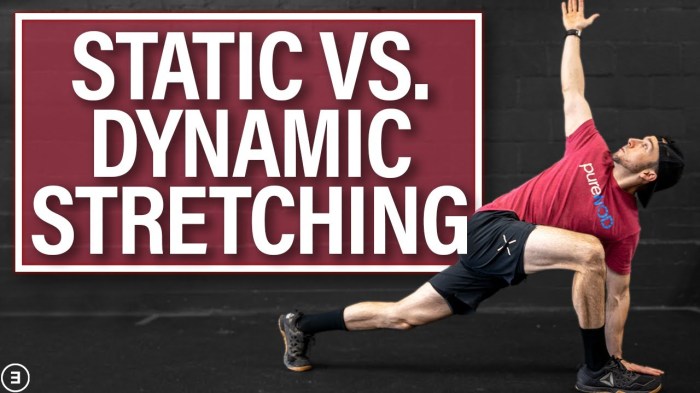
Incorporating stretching into your existing fitness regimen is crucial for maximizing its benefits and minimizing the risk of injury. A well-rounded fitness plan should include both dynamic and static stretching, strategically placed to optimize performance and recovery. This section explores how to seamlessly integrate these stretching modalities into various popular fitness approaches.Integrating dynamic and static stretching into a broader fitness routine enhances flexibility, improves range of motion, and reduces the risk of muscle strains and tears.
The type and timing of stretching will vary depending on the specific activity. For instance, dynamic stretches are ideal before a workout to prepare the muscles, while static stretches are better suited for post-workout recovery.
Dynamic and Static Stretching in General Fitness Guides
General fitness programs often benefit from incorporating both dynamic and static stretches. A typical session might begin with 5-10 minutes of dynamic stretches like arm circles, leg swings, and torso twists to increase blood flow and prepare muscles for activity. Following the workout, 10-15 minutes of static stretches, holding each stretch for 20-30 seconds, can promote relaxation and recovery.
This approach improves overall fitness levels and reduces the risk of injury.
Dynamic and Static Stretching in Home Workouts
Home workouts can easily incorporate stretching. Before a home workout routine, dynamic stretches can be performed in a small space, warming up the muscles for activities like bodyweight exercises or resistance band training. After the workout, static stretches can target specific muscle groups worked during the session, aiding in muscle recovery and flexibility improvement. For example, after push-ups, static stretches for the chest and shoulders would be beneficial.
Dynamic and Static Stretching in Yoga and Meditation
Yoga and meditation practices inherently incorporate stretching. Dynamic stretches are often integrated into the warm-up sequences, while static stretches form the core of many poses. The focus is on controlled movements and mindful holding of postures, promoting both physical and mental well-being. The combination of dynamic and static stretching in yoga enhances flexibility, balance, and stress reduction.
Dynamic and Static Stretching in Strength Training
Strength training programs should include both dynamic and static stretching. Dynamic stretches, performed before lifting weights, prepare the muscles for the exertion involved. Static stretches, performed after the weight training session, aid in muscle recovery and flexibility improvement. Focusing on stretches that target the muscle groups used in the workout is crucial. For example, after leg day, static stretches for the hamstrings and quadriceps would be essential.
Dynamic and Static Stretching in Cardio Workouts
Cardio workouts benefit from a combination of dynamic and static stretching. Dynamic stretches, like high knees and butt kicks, can be incorporated as a warm-up before activities like running or cycling. Static stretches, after the workout, can target specific muscle groups used, improving flexibility and preventing stiffness. For runners, stretching the calves and hamstrings post-run is particularly important.
Dynamic and Static Stretching in Weight Loss Programs
Weight loss programs should include stretching to enhance flexibility and improve posture, potentially aiding in reducing the risk of injuries during workouts. Dynamic stretches can warm up muscles before cardio sessions or strength training, while static stretches can help alleviate muscle soreness after exercise. The improved flexibility can also make other physical activities easier and more enjoyable, encouraging consistency in the weight loss program.
Dynamic and Static Stretching in Pilates and Stretching
Pilates and stretching programs naturally integrate both dynamic and static stretches. Pilates exercises themselves often incorporate dynamic stretches, while the program often concludes with a series of static stretches to improve flexibility and range of motion. The controlled movements in Pilates engage and stretch muscles, improving body awareness and core strength.
Dynamic and Static Stretching in Outdoor Fitness Adventures
Outdoor activities like hiking or trail running can benefit from dynamic stretches before the activity to prepare the muscles for uneven terrain and exertion. Static stretches after the activity can aid in muscle recovery and prevent stiffness. The focus should be on stretches that target the muscles used during the specific activity. For instance, hikers might focus on leg and hip stretches after a challenging climb.
Sample Weekly Fitness Schedule Incorporating Stretching
A sample weekly schedule could look like this:
| Day | Activity | Stretching |
|---|---|---|
| Monday | Strength Training (Upper Body) | 5 min dynamic, 10 min static (upper body focus) |
| Tuesday | Cardio (Running) | 5 min dynamic, 10 min static (legs and core) |
| Wednesday | Rest or Active Recovery (Yoga) | 30 min Yoga (includes dynamic and static stretches) |
| Thursday | Strength Training (Lower Body) | 5 min dynamic, 10 min static (lower body focus) |
| Friday | Cardio (Swimming) | 5 min dynamic, 10 min static (shoulders and back) |
| Saturday | Pilates | Incorporated within the Pilates session |
| Sunday | Rest | Optional 15 min static stretching |
Consistency and Progressive Overload in a Stretching Program
Consistency is key to seeing results from a stretching program. Regular stretching, ideally several times a week, is necessary to improve flexibility and range of motion. Progressive overload involves gradually increasing the intensity or duration of your stretches over time. This could involve holding stretches for longer periods, increasing the depth of the stretch, or incorporating more challenging stretches.
This gradual progression helps your body adapt and prevents injury. For example, if you can comfortably hold a hamstring stretch for 20 seconds, gradually increase the hold time to 30 seconds, then 45 seconds, and so on.
Stretching and Recovery
Stretching plays a crucial role in the recovery process after physical activity, helping to alleviate muscle soreness and improve overall performance. By incorporating appropriate stretching techniques into your post-workout routine, you can significantly enhance your body’s ability to repair and rebuild muscle tissue. This section will explore the relationship between stretching and muscle recovery, highlighting the benefits of various approaches.The effectiveness of stretching in reducing delayed-onset muscle soreness (DOMS) is well-documented.
DOMS, that familiar post-workout muscle ache that typically peaks 24-72 hours after intense exercise, is caused by microscopic muscle tears. Stretching helps to improve blood flow to the affected muscles, delivering oxygen and nutrients vital for the repair process. This increased blood flow also facilitates the removal of metabolic waste products that contribute to muscle soreness and inflammation. Furthermore, stretching can help to reduce muscle stiffness and improve range of motion, making everyday activities more comfortable.
The Role of Stretching in Muscle Recovery
Regular stretching, particularly after intense workouts, can significantly mitigate the severity and duration of DOMS. Studies have shown that both static and dynamic stretching can be beneficial, although the optimal approach may vary depending on individual needs and the type of exercise performed. Static stretching, which involves holding a stretch for a prolonged period (typically 15-30 seconds), can help to lengthen muscle fibers and improve flexibility.
Dynamic stretching, which involves controlled movements through a range of motion, can enhance blood flow and prepare muscles for activity. The combination of both types of stretching may provide the most comprehensive recovery benefits. For example, a post-run routine could include dynamic stretches like leg swings and arm circles followed by static stretches holding hamstring and quad stretches.
Comparing Stretching Techniques for Muscle Recovery
Static stretching is often recommended for post-workout recovery due to its ability to improve muscle length and reduce stiffness. However, some research suggests that dynamic stretching might be more beneficial immediately following intense exercise, as it promotes blood flow and reduces muscle fatigue. Ultimately, the best approach may involve a combination of both, utilizing dynamic stretches earlier in the recovery process and transitioning to static stretches as the muscles begin to cool down.
For instance, a high-intensity interval training (HIIT) workout might benefit from dynamic stretches immediately following the session, followed by static stretches later in the evening. The specific stretching protocol should be tailored to the individual’s training program and recovery needs.
Stretching, Flexibility, and Overall Fitness
Flexibility, the range of motion around a joint, is a crucial component of overall fitness. Regular stretching enhances flexibility, contributing to improved performance, injury prevention, and better posture. Increased flexibility leads to greater efficiency in movement, allowing for a wider range of motion during athletic activities. Furthermore, improved flexibility reduces the risk of muscle strains and tears by increasing the elasticity and resilience of muscle tissue.
This positive feedback loop contributes to better overall fitness levels and a reduced likelihood of injuries. Individuals with better flexibility often experience less pain and stiffness in their daily lives, improving quality of life and enhancing their ability to participate in various physical activities.
Illustrative Examples of Stretches
Understanding the practical application of dynamic and static stretching is crucial for maximizing their benefits. The following examples provide detailed descriptions of effective stretches, highlighting the targeted muscles and offering modifications for various fitness levels. Remember to listen to your body and stop if you feel any pain.
Dynamic Stretches
Dynamic stretches involve movement, preparing your muscles for activity by increasing blood flow and range of motion. These stretches should be performed before a workout or physical activity.
- Arm Circles: Imagine your arms extending like branches reaching for the sun, then slowly circling them forward ten times. Reverse the direction and repeat. This targets the shoulder muscles (deltoids, rotator cuff), improving mobility and flexibility. Beginners can perform smaller circles with less intensity, while advanced individuals can increase the circle size and speed.
- Leg Swings: Stand on one leg, gently swing the other leg forward and backward, keeping a slight bend in the knee. Repeat ten times on each leg. This targets the hip flexors, hamstrings, and quadriceps. Modifications for beginners include smaller swings and reduced range of motion; advanced individuals can increase the height and speed of the swings.
- Torso Twists: Stand with feet shoulder-width apart, and gently twist your torso from side to side, keeping your core engaged. Repeat ten times in each direction. This targets the oblique muscles and improves spinal mobility. Beginners should perform smaller twists, while advanced individuals can incorporate a medicine ball or resistance band to increase intensity.
- High Knees: Bring your knees up towards your chest while jogging in place, aiming for a high knee lift with each step. Repeat for 30 seconds. This targets the hip flexors, quadriceps, and core. Beginners can reduce the speed and height of the knee lift; advanced individuals can increase the speed and incorporate a greater range of motion.
- Butt Kicks: Jog in place, bringing your heels towards your glutes with each step. Repeat for 30 seconds. This targets the hamstrings and glutes. Beginners can perform slower kicks with a smaller range of motion; advanced individuals can increase the speed and intensity.
Static Stretches
Static stretches involve holding a position for a period of time, lengthening the muscles and improving flexibility. These are best performed after a workout or physical activity, or as a separate session.
- Hamstring Stretch: Sit on the floor with legs extended. Reach towards your toes, keeping your back straight. Hold for 30 seconds. This targets the hamstrings. Beginners can bend their knees slightly; advanced individuals can try to reach their toes without bending their knees.
- Quadriceps Stretch: Stand on one leg, holding the other leg behind you with your hand, pulling your heel towards your buttock. Hold for 30 seconds, then repeat on the other leg. This targets the quadriceps. Beginners can use a chair or wall for balance; advanced individuals can increase the stretch by pulling the heel closer to the buttock.
- Calf Stretch: Stand facing a wall, placing one leg slightly behind the other. Lean forward, keeping your back leg straight, until you feel a stretch in your calf muscle. Hold for 30 seconds, then repeat on the other leg. This targets the gastrocnemius and soleus muscles. Beginners can bend their back knee slightly; advanced individuals can increase the stretch by leaning further forward.
- Triceps Stretch: Raise one arm overhead, bending your elbow and dropping your forearm behind your head. Gently pull your elbow toward your head with your other hand. Hold for 30 seconds, then repeat on the other arm. This targets the triceps muscles. Beginners can use their other hand to apply less pressure; advanced individuals can increase the stretch by pulling their elbow further towards their head.
- Shoulder Stretch: Extend one arm across your body and gently pull it towards your chest with your opposite hand. Hold for 30 seconds, then repeat on the other side. This targets the pectoral muscles and shoulder muscles. Beginners can use less pressure; advanced individuals can increase the stretch by pulling their arm closer to their chest.
Fitness Gadgets and Gear for Stretching: Dynamic Stretching Vs. Static Stretching
Enhancing your stretching routine with fitness gadgets and gear can significantly improve flexibility, range of motion, and recovery. The right tools can provide support, resistance, and targeted pressure to deepen stretches and make them more effective. However, it’s crucial to understand the benefits and limitations of each tool to avoid injury and maximize results.Proper use of stretching equipment can lead to increased flexibility and reduced risk of injury during exercise.
However, overreliance on gadgets without proper technique can be detrimental. Always prioritize correct form and listen to your body’s signals.
Foam Rollers
Foam rollers are cylindrical tools made of varying densities of foam. They are used to apply self-myofascial release (SMR) – a technique that targets muscle knots and tightness by applying pressure to the muscle tissue. This can improve blood flow, reduce muscle soreness, and prepare muscles for stretching. Different densities offer varying levels of intensity, allowing users to adjust the pressure based on their needs and tolerance.
For example, a higher-density roller provides a firmer, deeper massage, while a lower-density roller offers a gentler approach. Using a foam roller before a stretching routine can help loosen up tight muscles, making it easier to achieve a deeper stretch. Improper use, however, can cause bruising or discomfort if applied with excessive pressure or to sensitive areas.
Resistance Bands
Resistance bands provide resistance during stretching, helping to increase range of motion and improve muscle flexibility. They come in various resistance levels, allowing for progressive overload as flexibility improves. Using a resistance band can help you achieve a deeper stretch than you might be able to achieve passively. For example, a resistance band can assist in hamstring stretches by providing resistance as you extend your leg, allowing for a greater stretch than you could achieve without the band.
Conversely, improper use, such as using a resistance level that is too high, can lead to muscle strain or injury.
Yoga Blocks
Yoga blocks are rectangular blocks, typically made of foam or wood, that provide support during yoga and stretching exercises. They are especially useful for individuals with limited flexibility, allowing them to modify poses and achieve a deeper stretch without overextending. For example, a yoga block can be used to support the body during forward folds, allowing a person to maintain a straight back while deepening the stretch.
The use of blocks helps to maintain proper alignment and reduces strain on joints.
Recommended Fitness Gadgets and Gear for Effective Stretching
Choosing the right equipment depends on individual needs and goals. A balanced approach might include a foam roller for SMR, resistance bands for assisted stretching, and yoga blocks for support and modification. Always prioritize quality over quantity; investing in durable, well-made equipment ensures longevity and safety. It’s also beneficial to seek guidance from a qualified fitness professional to learn proper techniques for using these tools to avoid injury.
Ultimately, the choice between dynamic and static stretching hinges on individual goals and the context of physical activity. While dynamic stretching primes the body for exertion, static stretching fosters recovery and enhances long-term flexibility. By strategically incorporating both into a comprehensive fitness regimen, individuals can optimize their performance, reduce injury risk, and promote holistic well-being. Remember to prioritize proper form and listen to your body to achieve the greatest benefits from your stretching practice.
Clarifying Questions
Can I do static stretching before a workout?
While generally recommended after a workout, limited static stretching
-might* be incorporated before, focusing on major muscle groups, but avoid holding stretches for extended periods as it could negatively impact performance.
How long should I hold a static stretch?
Ideally, hold each static stretch for 15-30 seconds. Listen to your body and adjust accordingly; you shouldn’t feel sharp pain.
Is dynamic stretching enough for flexibility?
Dynamic stretching improves active flexibility, crucial for performance. However, static stretching is necessary for improving passive flexibility and long-term range of motion.
What if I feel pain during stretching?
Stop immediately. Pain indicates you’ve exceeded your body’s current limits. Gentle stretching is key; never push through sharp pain.


