Building Core Strength A Comprehensive Guide
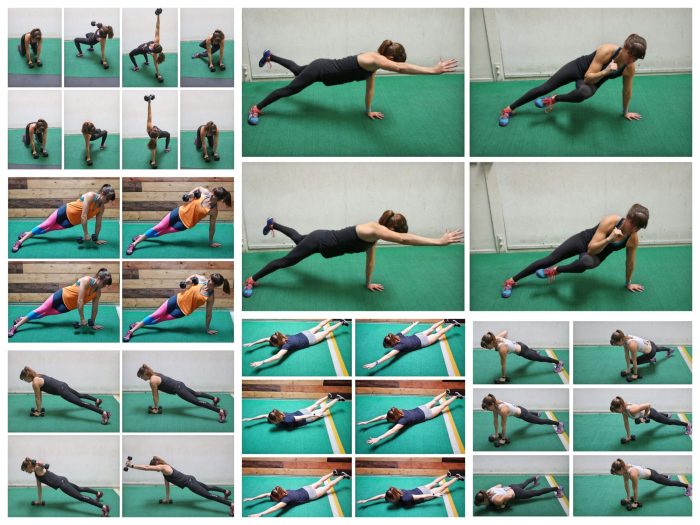
Building Core Strength is fundamental to overall health and well-being, impacting everything from daily activities to athletic performance. A strong core isn’t just about having visible abs; it’s about possessing the stability and power necessary for efficient movement and injury prevention. This guide explores the multifaceted nature of core strength, from understanding its components to developing effective workout routines and integrating core training into your overall fitness plan.
We’ll delve into practical assessments to gauge your current core strength, followed by a detailed exploration of various exercises suitable for different fitness levels. Learn how to safely and effectively build a robust core, incorporating techniques that improve posture, balance, and power. The benefits extend beyond physical fitness, encompassing improved confidence and a greater sense of overall well-being.
Defining Core Strength
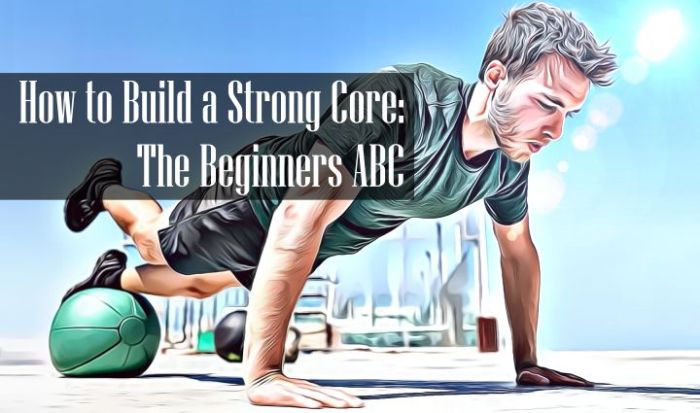
Core strength is more than just having a six-pack; it’s the foundation of overall fitness and functional movement. It involves the coordinated action of multiple muscle groups to stabilize the spine and pelvis, allowing for efficient movement and preventing injury. A strong core is crucial for everyday activities, athletic performance, and maintaining good posture.
The core encompasses more than just the abdominal muscles; it’s a complex network of interconnected muscles working together. Understanding the individual components and their interplay is key to developing effective core training.
Components of Core Strength
The core comprises several key muscle groups: the abdominal muscles, the back muscles, and the pelvic floor muscles. These groups work synergistically to provide stability and control movement. The abdominal muscles, located in the front and sides of the abdomen, provide anterior support and assist in flexion, rotation, and lateral bending of the spine. The back muscles, including the erector spinae and quadratus lumborum, provide posterior support and counteract the anterior forces generated by the abdominal muscles, maintaining spinal alignment.
The pelvic floor muscles form a sling-like structure at the base of the pelvis, providing support for the pelvic organs and contributing to overall core stability. Weakness in any of these areas can lead to imbalances and potential injury.
Importance of Core Strength for Overall Fitness and Daily Life
Strong core muscles are essential for a wide range of activities. In daily life, a strong core helps with maintaining good posture, lifting heavy objects safely, and performing everyday movements like bending and twisting without strain. In sports and fitness, a strong core is critical for power generation, balance, and injury prevention. For example, a strong core allows for efficient transfer of force from the lower body to the upper body in activities like throwing, hitting, or kicking.
It also enhances stability and balance, reducing the risk of falls and injuries. Activities like running, swimming, cycling, and weightlifting all rely heavily on core strength for optimal performance and injury prevention.
Examples of Activities Relying Heavily on Core Strength
Many activities require significant core engagement. Consider the following examples:
Yoga and Pilates: These practices emphasize core engagement for balance and control during various poses.
Weightlifting: Maintaining a stable core is vital for proper form and preventing injury during weight training exercises.
Running: Core strength is crucial for maintaining efficient running form and preventing back pain.
Golf: A strong core provides the stability and power needed for a controlled and accurate swing.
Dancing: Core strength is essential for balance, coordination, and executing complex movements.
Comparison of Core Muscle Groups and Their Functions
| Muscle Group | Primary Function | Secondary Function(s) | Weakness Implications |
|---|---|---|---|
| Abdominal Muscles (Rectus Abdominis, Obliques, Transverse Abdominis) | Flexion, Rotation, Lateral Flexion of the Spine | Compression of the Abdomen, Spinal Stabilization | Poor Posture, Increased Risk of Back Pain, Reduced Athletic Performance |
| Back Muscles (Erector Spinae, Quadratus Lumborum) | Extension, Lateral Flexion, Rotation of the Spine | Spinal Stabilization, Posture Maintenance | Poor Posture, Increased Risk of Back Pain, Reduced Stability |
| Pelvic Floor Muscles | Support Pelvic Organs | Spinal Stabilization, Urinary/Bowel Control | Urinary Incontinence, Pelvic Organ Prolapse, Reduced Core Stability |
Assessing Your Current Core Strength
Understanding your current core strength level is crucial before embarking on any strengthening program. A proper assessment allows you to establish a baseline, tailor your exercises appropriately, and track your progress effectively. This ensures you’re challenging yourself adequately without risking injury. Accurate self-assessment requires understanding the limitations of home-based testing and prioritizing safe practices.Different methods exist for assessing core strength, each with its own advantages and limitations.
These assessments provide a snapshot of your current capabilities and help guide your training plan.
Core Strength Assessment Methods
Several methods can be used to assess core strength. The plank test and curl-up test are two commonly used and readily accessible options for self-assessment. While not exhaustive, these tests provide a valuable indication of core endurance and strength. It’s important to remember that these are just assessments; they don’t replace professional evaluation.
The Plank Test
The plank test measures core endurance. A proper plank involves maintaining a straight line from head to heels, engaging your core muscles to support your body weight. To perform a plank, start by positioning yourself on your forearms and toes, ensuring your body forms a straight line. Hold this position for as long as possible while maintaining proper form.
The longer you can hold the plank, the stronger your core endurance. This test is primarily assessing isometric strength, meaning the strength exerted while holding a static position. Variations in plank position, such as forearm plank or high plank, can provide different levels of challenge.
The Curl-Up Test
The curl-up test assesses abdominal strength and endurance. Lie on your back with your knees bent and feet flat on the floor. Slowly curl your upper body towards your knees, engaging your abdominal muscles. Lower yourself back down slowly and repeat the movement. Count the number of repetitions you can perform with proper form within a specific time frame (e.g., one minute).
This test primarily assesses dynamic strength, meaning the strength exerted during movement. Focus on controlled movements and avoid using momentum to perform the curl-ups.
Guidelines for Safe and Effective Self-Assessment, Building Core Strength
Safe and effective self-assessment is paramount. Prioritize proper form over quantity to avoid injury. Listen to your body and stop if you experience any pain. Start with shorter durations or fewer repetitions and gradually increase the intensity and duration as your strength improves. Consistency is key; regular assessments will allow you to track your progress effectively.
Consider consulting a healthcare professional or certified fitness trainer if you have any underlying health conditions or concerns before starting any new exercise program.
Step-by-Step Guide for a Basic Core Strength Assessment at Home
1. Warm-up
Begin with 5-10 minutes of light cardio, such as jogging in place or jumping jacks, followed by dynamic stretches like torso twists and arm circles.
2. Plank Test
Assume a forearm plank position, ensuring your body forms a straight line. Hold this position for as long as possible while maintaining proper form. Record your time.
3. Curl-up Test
Perform curl-ups, focusing on controlled movements and proper form. Count the number of repetitions you can perform in one minute. Record your repetitions.
4. Cool-down
Perform static stretches, holding each stretch for 20-30 seconds. Focus on stretches for your abdominal muscles, back, and shoulders.
5. Record Results
Note down the duration of your plank and the number of curl-ups completed.
Progress Tracking Chart
| Date | Plank Time (seconds) | Curl-ups (1 minute) |
|---|---|---|
| [Date] | [Time] | [Repetitions] |
| [Date] | [Time] | [Repetitions] |
| [Date] | [Time] | [Repetitions] |
Building Core Strength Through Exercise
Building a strong core is achievable through consistent exercise targeting the various muscle groups that comprise it. This includes not only the rectus abdominis (the “six-pack” muscles), but also the obliques (side muscles), transverse abdominis (deep core muscle), and erector spinae (lower back muscles). A well-rounded core strengthening program incorporates a variety of exercises to ensure comprehensive development and prevent imbalances.
Core Exercises and Proper Form
Effective core training relies heavily on maintaining correct form to maximize results and minimize the risk of injury. Incorrect form can reduce the effectiveness of the exercise and potentially lead to strain or pain. The following exercises illustrate proper technique for different core muscle groups.
- Plank: Begin in a push-up position, but resting on your forearms instead of your hands. Your body should form a straight line from head to heels, engaging your core to maintain stability. Hold this position for a designated time, focusing on maintaining a neutral spine and avoiding sagging hips or arching your back. Imagine a straight line running from your head to your heels, actively engaging your core to prevent any deviation.
This exercise primarily targets the transverse abdominis and other deep core muscles.
- Crunches: Lie on your back with knees bent and feet flat on the floor. Place your hands behind your head, lightly supporting your neck. Curl your upper body towards your knees, engaging your abdominal muscles. Avoid pulling on your neck; the movement should originate from your core. Lower slowly back to the starting position.
Focus on controlled movement and full engagement of the rectus abdominis.
- Russian Twists: Sit on the floor with knees bent and feet slightly lifted. Lean back slightly, maintaining a straight back. Hold a weight (or medicine ball) in front of your chest. Twist your torso to the right, touching the weight to the floor beside your hip, then twist to the left. This exercise targets the obliques, strengthening the muscles on the sides of your abdomen.
- Bird Dog: Start on your hands and knees, maintaining a neutral spine. Extend one arm forward and the opposite leg backward simultaneously, keeping your core engaged and your back straight. Hold for a moment, then return to the starting position and repeat on the other side. This exercise improves stability and coordination, working the entire core, including the erector spinae.
- Bicycle Crunches: Lie on your back with hands behind your head and knees bent. Bring one elbow towards the opposite knee while extending the other leg. Alternate sides, mimicking a bicycle motion. This exercise effectively targets the obliques and rectus abdominis.
Beginner, Intermediate, and Advanced Core Workout Plans
These plans provide a structured approach to building core strength, catering to different fitness levels. Remember to listen to your body and adjust the intensity and repetitions as needed.
Beginner (3 times per week):
- Plank: 3 sets of 30-second holds
- Crunches: 3 sets of 10-12 repetitions
- Bird Dog: 3 sets of 10-12 repetitions per side
Intermediate (4 times per week):
- Plank: 3 sets of 45-60 second holds
- Crunches: 3 sets of 15-20 repetitions
- Russian Twists: 3 sets of 15-20 repetitions per side (with light weight)
- Bicycle Crunches: 3 sets of 15-20 repetitions per side
Advanced (5 times per week):
- Plank: 3 sets of 60-90 second holds, or variations like side plank
- Crunches: 3 sets of 20-25 repetitions, or advanced variations like decline crunches
- Russian Twists: 3 sets of 20-25 repetitions per side (with moderate to heavy weight)
- Bicycle Crunches: 3 sets of 20-25 repetitions per side
- Hanging Leg Raises: 3 sets of as many repetitions as possible
Modifications for Different Fitness Levels
Modifications are crucial for adapting exercises to individual needs and limitations. For example, individuals with lower back pain might find it beneficial to modify plank exercises by performing them on their knees instead of their toes, reducing the strain on their lower back. Similarly, those with limited mobility can adjust crunches by performing them with their knees bent at a wider angle, making the exercise less intense.
For beginners, reducing the number of repetitions or sets is appropriate. Advanced individuals can increase the number of repetitions, sets, or incorporate weighted variations. Always consult with a healthcare professional or certified fitness trainer before starting any new workout routine, particularly if you have pre-existing conditions.
Incorporating Core Strength into Other Fitness Activities
A strong core isn’t just about aesthetics; it’s fundamental to optimal performance and injury prevention across various fitness disciplines. By integrating core strengthening exercises into your routine, you can significantly enhance your capabilities and reduce your risk of injury in activities ranging from yoga to high-intensity interval training. The benefits extend far beyond isolated core work, influencing overall body mechanics and efficiency.Core strength plays a vital role in improving performance and reducing the risk of injury in a wide range of physical activities.
The interconnectedness of the core muscles with other muscle groups means that improvements in core strength directly translate to improved stability, power, and balance in other movements.
Core Strength in Yoga and Pilates
Yoga and Pilates, while distinct, share a common emphasis on core engagement. In yoga, a strong core provides stability for balancing postures (asanas) and facilitates deeper stretches. The core acts as the anchor, allowing for controlled movement and preventing injury. Similarly, Pilates focuses heavily on core strength as the foundation for controlled movements, promoting improved posture, balance, and body awareness.
Effective core engagement in both disciplines requires a deep understanding of proper breathing techniques and precise muscle activation. For instance, in a plank pose (yoga) or a hundred (Pilates), maintaining a stable core is crucial for preventing lower back strain and maximizing the effectiveness of the exercise.
Core Engagement in Different Strength Training Modalities
Core engagement varies across different strength training methods. In weightlifting, a stable core is crucial for transferring force efficiently from the lower body to the upper body, as seen in exercises like squats and deadlifts. A weak core compromises form and power, increasing the risk of injury. Conversely, bodyweight training often necessitates even greater core activation to maintain balance and stability, particularly in exercises such as handstands or pistol squats.
Circuit training demands consistent core engagement throughout the entire workout, as rapid transitions between exercises require continuous stabilization. The degree of core activation depends on the specific exercise, but a strong core is consistently essential for safe and effective performance.
Core Strength and Cardio Workout Performance
Core strength significantly enhances performance in cardio workouts. A strong core improves stability and balance, allowing for more efficient movement and increased power output. For example, in running, a strong core helps maintain proper posture, reducing the risk of injury and improving running form. Similarly, in cycling, core strength aids in efficient power transfer from the legs to the pedals.
In swimming, a strong core contributes to better body rotation and propulsion through the water. The enhanced stability provided by a strong core translates to better endurance and improved overall performance.
Core Strength and Injury Prevention
A strong core is a cornerstone of injury prevention across a wide spectrum of physical activities. The core muscles act as a natural shock absorber and stabilizer, reducing stress on joints and ligaments. For instance, a strong core can prevent lower back pain during activities like lifting weights or running. It also helps to protect the knees and ankles from injury by providing better stability during movements.
In sports like tennis or basketball, a strong core helps to prevent injuries from twisting or sudden changes in direction. The importance of a strong core in injury prevention is undeniable, as it provides the structural support necessary to withstand the stresses imposed by physical activity.
General Fitness Guides, Home Workouts, and Related Topics
Building a strong core at home is entirely achievable with the right plan and dedication. This section provides practical guidance, routines, and tips to help you build core strength effectively in your own space. We’ll cover essential equipment, motivational strategies, and the integration of complementary fitness practices.
Sample Home Core Workout Routine
This routine focuses on a balanced approach, targeting various core muscle groups. Remember to consult your physician before starting any new workout regimen. Perform each exercise for 3 sets of 10-12 repetitions, unless otherwise specified. Rest for 60 seconds between sets.
- Plank: A fundamental exercise engaging the entire core. Hold a plank position, maintaining a straight line from head to heels, for 30-60 seconds.
- Crunches: Classic abdominal exercise targeting the rectus abdominis. Focus on controlled movements and proper form to avoid strain.
- Russian Twists: Excellent for obliques. Sit with knees bent and feet slightly off the ground, twisting your torso from side to side while holding a light weight or medicine ball.
- Bicycle Crunches: Works both the rectus abdominis and obliques. Bring opposite elbow and knee towards each other in a cycling motion.
- Leg Raises: Targets the lower abdominal muscles. Lie on your back, raise your legs straight up, and lower them slowly, controlling the movement.
- Bird Dog: Improves core stability and balance. Start on your hands and knees, extend opposite arm and leg simultaneously, maintaining a straight line from hand to foot.
Tips for Maintaining Motivation and Consistency
Consistency is key to seeing results. Here are some strategies to stay motivated with your home workout program:
- Set Realistic Goals: Start small and gradually increase the intensity and duration of your workouts. Celebrate milestones along the way.
- Find a Workout Buddy: Working out with a friend can provide accountability and support.
- Create a Dedicated Workout Space: Designate a specific area in your home for exercise to minimize distractions.
- Make it Enjoyable: Choose exercises you enjoy to make your workouts less of a chore and more of a fun activity.
- Track Your Progress: Monitor your workouts and note your improvements to stay motivated.
Essential Equipment for Effective Home Core Workouts
While not mandatory, certain equipment can enhance your home core workouts:
- Yoga Mat: Provides cushioning and comfort during floor exercises.
- Resistance Bands: Add resistance to core exercises, increasing the challenge.
- Medicine Ball: Adds weight and variety to exercises like Russian twists and slams.
- Stability Ball: Challenges balance and core stability while performing various exercises.
Benefits of Yoga and Meditation for Core Strength
Yoga and meditation offer significant benefits beyond physical strength. Yoga improves flexibility, balance, and body awareness, all crucial for core stability. Meditation helps reduce stress, which can positively impact your overall fitness journey. The improved mind-body connection fosters better control and engagement of core muscles during exercise.
Strength Training Exercises Supporting Core Strength Development
Many strength training exercises indirectly, and some directly, engage the core muscles for stabilization. Deadlifts, squats, and overhead presses all require significant core engagement to maintain proper form and lift safely. Exercises like planks and pallof presses directly target core strength.
Cardio Workouts and Their Complement to Core Strengthening
Cardiovascular exercise improves overall fitness, endurance, and calorie burning, contributing to weight management which aids core strength development. It also improves cardiovascular health, enhancing your ability to sustain more intense core workouts.
Proper Nutrition in Weight Loss and its Connection to Core Strength
A balanced diet is crucial for weight loss and overall health, including core strength development. Sufficient protein supports muscle growth and repair, while adequate calories provide the energy needed for workouts. A healthy diet improves energy levels and reduces inflammation, contributing to better overall fitness.
Pilates and Stretching for Core Stability and Flexibility
Pilates focuses on controlled movements and core engagement, improving core strength and stability. Stretching increases flexibility, preventing injuries and improving range of motion, enhancing the effectiveness of core exercises.
Safe and Effective Outdoor Fitness Adventures Engaging the Core
Activities like kayaking, hiking, and rock climbing engage the core muscles for stability and balance. These activities provide a fun and engaging way to build core strength while enjoying the outdoors.
Helpful Fitness Gadgets and Gear Assisting in Core Strengthening
Fitness trackers monitor progress and activity levels, while smart scales provide insights into body composition. Ab rollers and balance boards offer additional challenges and variety to your core workouts.
Examples of Fitness Challenges Focused on Building Core Strength
Many online fitness platforms offer 30-day core strength challenges with varying difficulty levels. These challenges provide structure and motivation, helping individuals achieve their fitness goals. These often involve a combination of core-specific exercises and other fitness activities.
Illustrative Examples: Building Core Strength
Understanding core exercises and their proper execution is crucial for building a strong and stable core. This section will detail three exercises, illustrating muscle activation, correct form, and potential modifications for different fitness levels. We will also visualize the appearance of a strong core and demonstrate a progression of exercises to illustrate increasing difficulty.
Three Core Exercises: Descriptions and Modifications
The following exercises target different aspects of core strength, emphasizing proper form to maximize effectiveness and minimize risk of injury.
- Plank: This isometric exercise engages multiple core muscles simultaneously. The starting position involves holding a straight line from head to heels, supporting the body on forearms and toes. Muscle activation: Primarily targets the rectus abdominis, transverse abdominis, obliques, and erector spinae muscles. Proper form: Maintain a straight line from head to heels, avoiding sagging in the hips or arching the back.
Engage the core muscles to stabilize the body. Modifications: Beginners can perform a modified plank on their knees, while advanced individuals can try a forearm plank with elevated legs or a side plank.
- Dead Bug: This exercise focuses on core stability and control while isolating abdominal muscles. Lying on your back with knees bent at 90 degrees and arms extended towards the ceiling, slowly lower one arm and the opposite leg simultaneously, maintaining core engagement. Muscle activation: Primarily targets the rectus abdominis, transverse abdominis, and obliques. Proper form: Keep the lower back pressed against the floor throughout the movement.
Avoid arching the back or twisting the torso. Modifications: Beginners can perform the exercise with knees slightly bent and arms at their sides, focusing on controlled movements. Advanced individuals can increase the range of motion and add weight.
- Russian Twists: This exercise targets the obliques, strengthening rotational core strength. Sit on the floor with knees bent and feet slightly lifted. Lean back slightly, maintaining a straight back, and twist your torso from side to side, touching the floor or a weight on either side. Muscle activation: Primarily targets the internal and external obliques. Proper form: Maintain a stable core throughout the movement.
Avoid using momentum to twist your torso. Modifications: Beginners can perform the exercise without weight, focusing on controlled movements. Advanced individuals can add weight (medicine ball, dumbbell) to increase the intensity.
Visual Representation of a Strong Core
A strong core is characterized by good postural alignment, with a neutral spine, shoulders relaxed, and a flat abdomen. There is noticeable muscle definition, particularly in the rectus abdominis (the “six-pack” muscles), obliques, and transverse abdominis. The individual demonstrates stability and control during movement. They maintain a balanced posture even under stress.
Progression of Core Exercises: Increasing Difficulty
The following illustrates a potential progression of core exercises, from beginner to advanced levels. This is a sample progression and individual needs may vary.
- Beginner: Knee push-ups (modified plank), bird-dog (alternating arm and leg raises), and simple crunches. These exercises focus on building a foundational level of core strength and stability.
- Intermediate: Plank (full plank), dead bug, Russian twists (without weight), and side planks. These exercises challenge core stability and strength further, incorporating more dynamic movements.
- Advanced: Advanced plank variations (e.g., side plank with leg raises, plank with arm and leg raises), weighted Russian twists, and anti-rotation presses. These exercises demand significant core strength, control, and stability.
Ultimately, building core strength is a journey, not a destination. Consistent effort, proper technique, and mindful progression are key to achieving lasting results. By understanding the intricacies of core muscle groups, employing effective exercise strategies, and incorporating core training into your daily life, you can unlock significant improvements in your physical capabilities and overall quality of life. Remember to listen to your body, prioritize proper form over intensity, and enjoy the process of strengthening your core.
Frequently Asked Questions
How long does it take to see results from core strengthening exercises?
Visible results vary, but you should notice improved stability and strength within a few weeks of consistent training. Significant changes in muscle definition might take longer.
Can I build core strength without equipment?
Absolutely! Many effective core exercises require no equipment at all, such as planks, bridges, and various bodyweight exercises.
What should I do if I feel pain during core exercises?
Stop immediately. Pain is a warning sign. Adjust your form, reduce the intensity, or consult a healthcare professional.
How often should I work my core?
Aim for core training 2-3 times per week, allowing for adequate rest between sessions. Listen to your body and adjust as needed.


